

October 2023 Top 3

The rapid weather change has dramatically pulled my professional focus. We are now in fall routines at school and at work, I’m wrapping up our summer sales season, helping clients make transitions in this off season and look at systems for the spring listing season. It’s a new world— and one that is best suited to tea, soft pants and slippers. Here are three items that have helped my thinking about productivity this month.

A few months ago, I was teetering on the brink of feeling overwhelmed by life’s responsibilities, afflicted by the ambient anxiety that seems to be an intrinsic part of life in the 2020s. In an effort to maintain or maybe restore — my sanity, I embarked on a personal endurance challenge.
Other people, at similar moments, begin competing in grueling triathlons or head off on intensive meditation retreats. Me? I decided to give up listening to podcasts or music while running or driving or loading the dishwasher or doing almost anything else. To just focus, in other words, on what it was I was actually doing, one activity at a time.
It was surprisingly hard. Once you’ve finished mocking me for treating such a trifling alteration to my habits like a grand existential struggle, I have one request: Try it. Identify the small tricks you use to avoid being fully present with whatever you’re doing and put them aside for a week or two.
You may discover, as I did, that you were unwittingly addicted to not doing one thing at a time. You might even come to agree with me that restoring our capacity to live sequentially — that is, focusing on one thing after another, in turn, and enduring the confrontation with our human limitations that this inherently entails — may be among the most crucial skills for thriving in the uncertain, crisis-prone future we all face.
It’s not that the urge to multitask is anything new. “One thinks with a watch in one’s hand,” Nietzsche complained as early as 1887, “even as one eats one’s midday meal while reading the latest news of the
stock market.” We’ve also long known that multitasking doesn’t really work. You’ve probably read — perhaps while half-watching TV — articles explaining the research findings that multitasking isn’t really even possible; mainly, we’re just switching our attention rapidly between different foci without realizing it, incurring cognitive costs each time we do so. One study of drivers found only 2.5 percent of people
showed no performance decrease when attempting two tasks at once. The rest of us just end up doing everything worse.
Yet the pressure to multitask can still often seem like something imposed on us from outside. Burdened by so many demands at work, you can feel as though you’ve no choice but to split your attention among them. Meanwhile, should you feel some responsibility to address the troubles of the wider world as well, then the causes for alarm — the climate, the fate of democracy, the threats from artificial
intelligence and the risk of nuclear war, to name just a few — are so numerous as to make multitasking look like every citizen’s duty.
Technological advances turn the screw further. Those of us not raised as digital natives can remember a time when we didn’t have the option of using social media to distract ourselves from unpleasant tasks and when the limits imposed by our tools — the speed of snail mail, for example, or the time it took to visit a library to conduct research — meant we felt less pressure from bosses or customers to somehow transcend the limits imposed by our finite attention spans.
But philosophers and spiritual teachers have long understood that the urge to avoid giving ourselves fully to any single activity goes deeper, to the core of our struggles as finite human beings.
The Hindu mystic Patanjali, for example, saw doing one thing at a time as a core yogic discipline, suggesting that it didn’t come easily to people 2,000 years ago, either. We rail against what the Christian
productivity writer Jordan Raynor calls our “unipresence” — our inability to be in more than one place at a time, in contrast to the omnipresence attributed to God — and against the shortness of our time
on earth, which averages little more than four thousand weeks. All this finitude feels unpleasantly constraining, because it means there will always be many more things we could do than we ever will do — and that the choice to spend a portion of our time on any one thing automatically entails the sacrifice of countless other things we might have done with it.
This explains the attraction of multitasking: It offers the false promise that we might somehow slip the bonds of our finitude. We tell ourselves that with sufficient self-discipline, plus the right time-management tricks, we might finally get on top of everything and feel good about ourselves at last. This utopia never arrives, of course, though it often feels as if it might be just around the corner.
The uncomfortable truth is that the only way to find sanity in an overwhelming world — and to have any concrete effect on that world — is to surrender such efforts to escape the human condition and drop back down into the reality of our limitations. Distracting yourself from challenging tasks by, say, listening to podcasts doesn’t actually make them more bearable over the long term; instead, it makes them less enjoyable, by reinforcing your belief that they’re the sort of activities you can tolerate only by distracting yourself — while at the same time all but ensuring that you’ll neither accomplish the task
in question nor digest the contents of the podcast as well as you otherwise might.
At work, the way to get more tasks done is to learn to let most of them wait while you focus on one. “This is the ‘secret’ of those people who ‘do so many things’ and apparently so many difficult things,” wrote the management guru Peter Drucker in his book “The Effective Executive.” “They do only one at a time.” Making a difference in one domain requires giving yourself permission not to care equally about all the others.
There will always be too much to do, no matter what you do. But the ironic upside of this seemingly dispiriting fact is that you needn’t beat yourself up for failing to do it all, nor keep pressuring yourself to find ways to get on top of it all by means of increasingly extreme multitasking.
Instead, you can pour your finite time, energy and attention into a handful of things that truly count. You’ll enjoy things more in the bargain. My gratifying new ability to be here now while running or driving or cooking dinner isn’t the result of having developed any great spiritual prowess. Rather, it’s a matter of realizing I could only ever be here now anyway — so I might as well give up the stressful struggle to pretend otherwise.
Mr. Burkeman is the author of “Four Thousand Weeks: Time Management for Mortals.”

A client of mine were sharing war stories of parenting and mothering and she suggested this little dude. This is my go to now— I keep it on my desk and can visually see how I’m tracking to my time blocks. I’ve been a long time pomodoro person, and the lovely ongoing visualization of progress is meaningful to me— especially when I need to focus on key tasks like contracting, marketing or communications.
The Pomodoro Technique is a time management method developed by Francesco Cirillo in the late 1980s.It uses a kitchen timer to break work into intervals, typically 25 minutes in length, separated by short breaks. Each interval is known as a pomodoro, from the Italian word for tomato, after the tomato-shaped kitchen timer Cirillo used as a university student.
The Best and Worst Halloween Candies
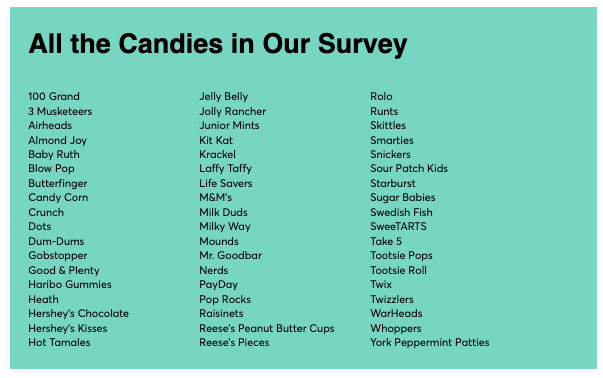

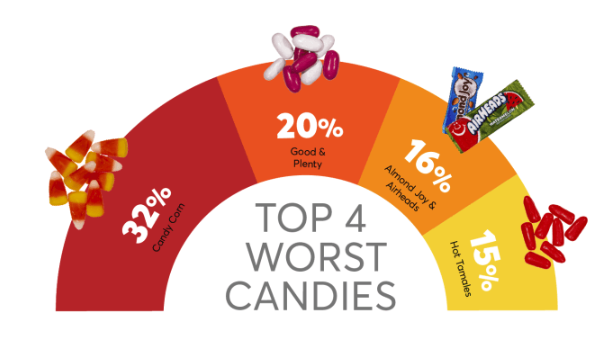
We are at that time of the year when we all raid our kids collections and encourage them to think of it as a family pool. Halloween candy also provides the powerful carrot to the Fitzpatrick family otivation system…. We can pretty much ride the chore/halloween candy bus all the way to Easter on a good year. Last year Consumer Reports published a ranking of best to worst Halloween Candy. The verdict— Chocolate— but only when paired with something else. What do you think? Agree or no?

Ready to Make A Move?
Our team is committed to helping you achieve your real estate goals. Connect with us to receive a free consultation to learn about your options in today’s market and see how our executive package is the only way to maximize your ROI. With my background as a Marketing Executive, you’ll get custom market analysis and ongoing tracking, video story-telling with A/B tested marketing messaging, catered open houses, staging and design, and so much more.
With over $100M of real estate sold, ranked in the top 1% of realtors nationally, and voted #1 Best Realtor on Bainbridge Island in 2021 and 2022, I know what it takes to craft the perfect offer and land your forever home. I’ve had the honor of serving over 100 families in Bainbridge Island, Greater Seattle Area, the Eastside and beyond. Properties include single and multi-family homes, condos in both the busy city and calm suburbs, waterfront homes with exceptional views, estate listings, and investment homes anywhere from a couple hundred thousand to a million dollars–each property receives the same concierge experience.
Let us help you buy or sell your home. Reach out to our team today to get started.
